
The audio guide and artificial intelligence
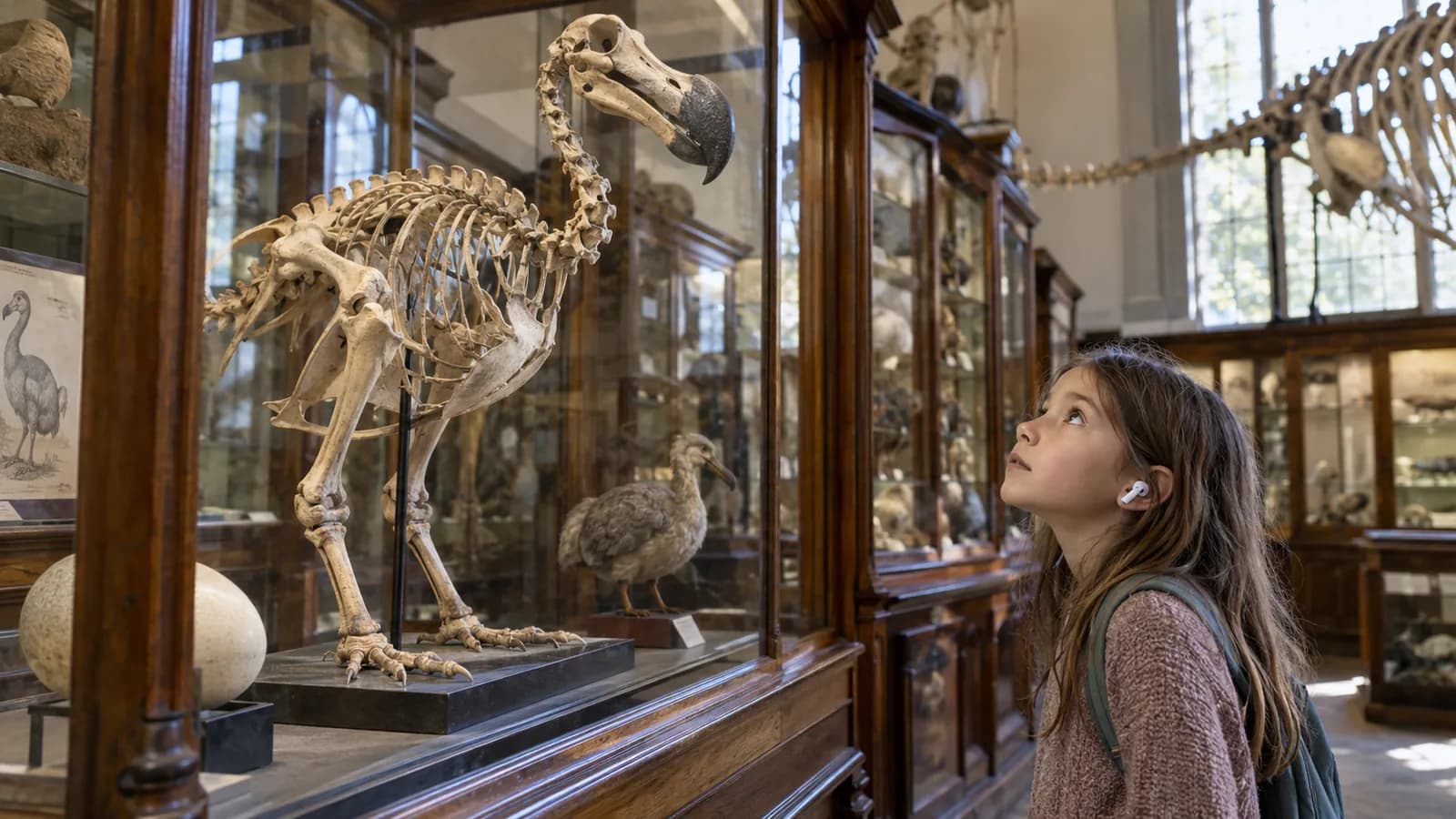
At the University of Cambridge's Museum of Zoology, a child who scans the code next to the dodo skeleton, the large flightless bird from Mauritius that vanished in the 17th century, can ask it why its species died out. The dodo answers in the first person, with words chosen for the child's age, and the conversation lasts as long as there are questions. The museum supplied the specimen's history and the angle of the story, a language model fine-tuned for scientific rigour does the rest. The audio guide equipped with artificial intelligence resembles this conversation, and it keeps its promises when the museum gives it its own texts.
48 %
of French people aged 12 and over use generative AI, more than double in two years
21 %
of users systematically check the information it gives them
81 %
of responding museums that use AI always have a human review what it produces, before using or publishing it
Artificial intelligence entered museums through the offices before it entered the galleries. Among the 403 museums that responded to the first global survey by UNESCO and ICOM, published in September 2026, 57% already use it, most often to write, translate or summarise, and only 23% of these users have put it to work for the visitor experience.
It is on this ground that the market now presents it, under the name of the intelligent audio guide. The term covers very different realities, from the specimen that converses with a child to the label read out in six languages. For a museum, what sets them apart is where what the machine says comes from, and who approves it.
What artificial intelligence does with museum content
Three operations recur among the venues that have brought AI into their galleries. In the most accomplished projects, the starting text remains the team's own.
Adjusting the story to the listener
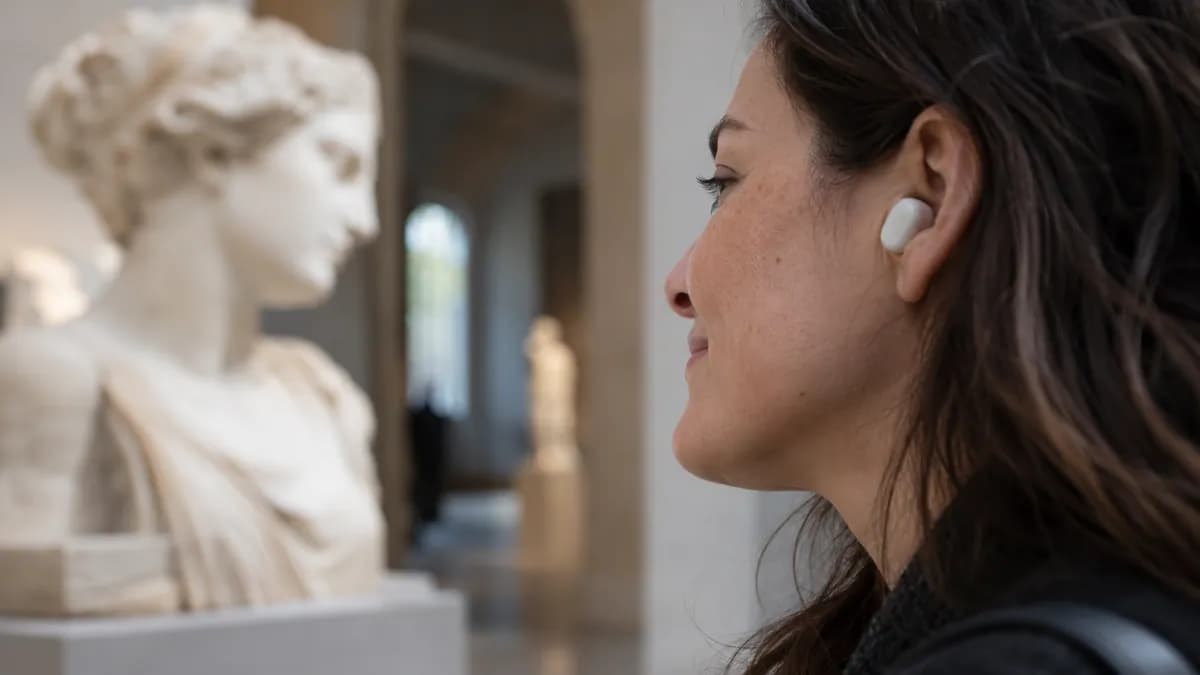
The adjustment concerns the level, the language and, depending on the device, the length of the story. In Cambridge, the tone and vocabulary of the specimens adapt to the listener's age, in more than twenty languages. A child and an adult standing before the same skeleton do not hear the same story, and neither was written in advance.
Adjusting the story is a long-standing ambition of digital interpretation. It becomes practicable work by work, without a team writing one version per audience.
Translating the text and giving it a voice
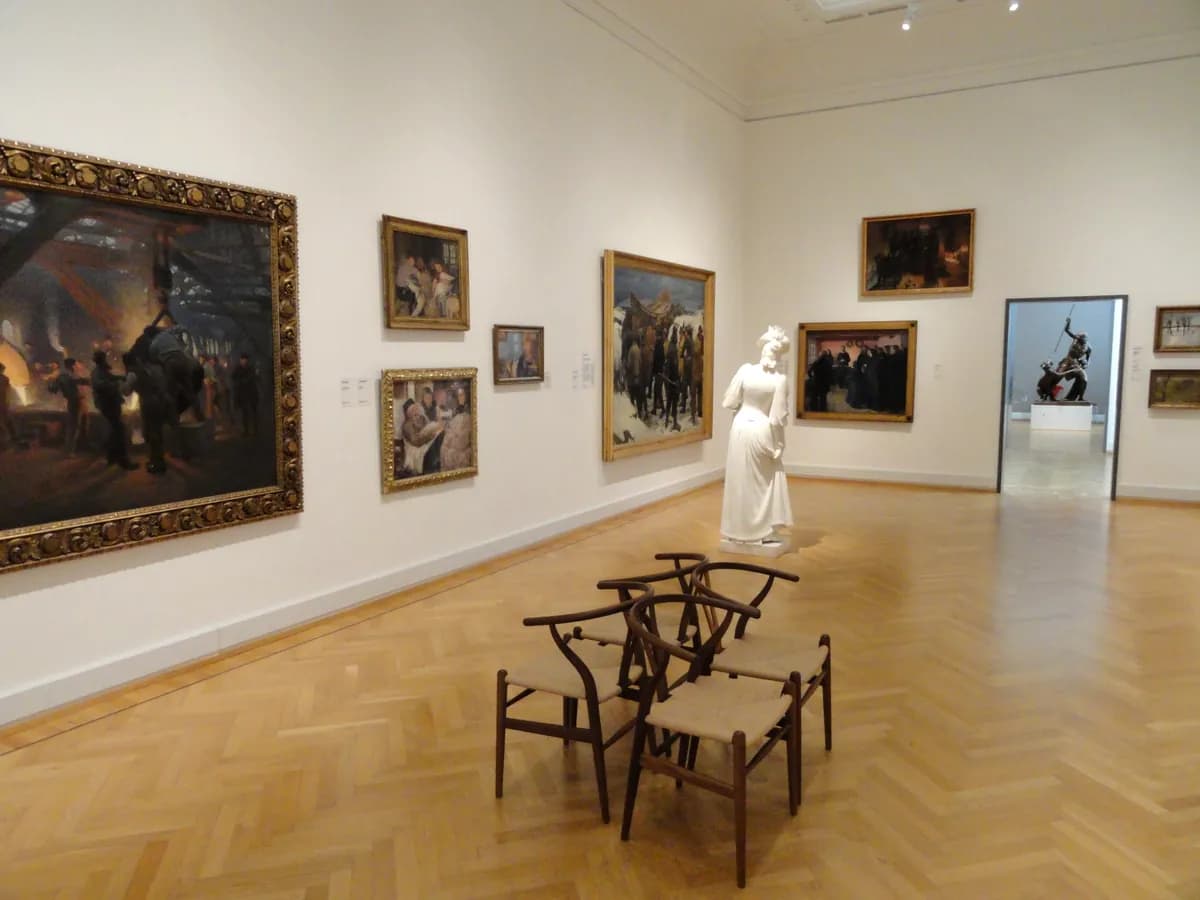
At SMK, the National Gallery of Denmark, the team is preparing 1,500 new artwork texts for a visitor guide expected in 2027. Written in Danish by the team and translated into English by translators, they will be machine-translated into French, Italian, German and Swedish, and read by a synthetic voice in every language. A glossary of the collection's own terms and a pronunciation guide, both maintained in-house, keep the machine in check.
The Cleveland Museum of Art followed the same logic for its blind and partially sighted visitors, with a visual description for the images of more than 68,000 objects, written by hand for the major pieces and generated according to the same style guide for all the others.
Answering the questions people dare not ask
From June 2025, the Palace of Versailles had twenty statues and fountains in its gardens converse with visitors strolling through, who scanned a code near the work and asked their questions aloud, in French, English or Spanish. The sources had been chosen with the chief curator in charge of sculpture, for an experience announced to run until winter 2025.
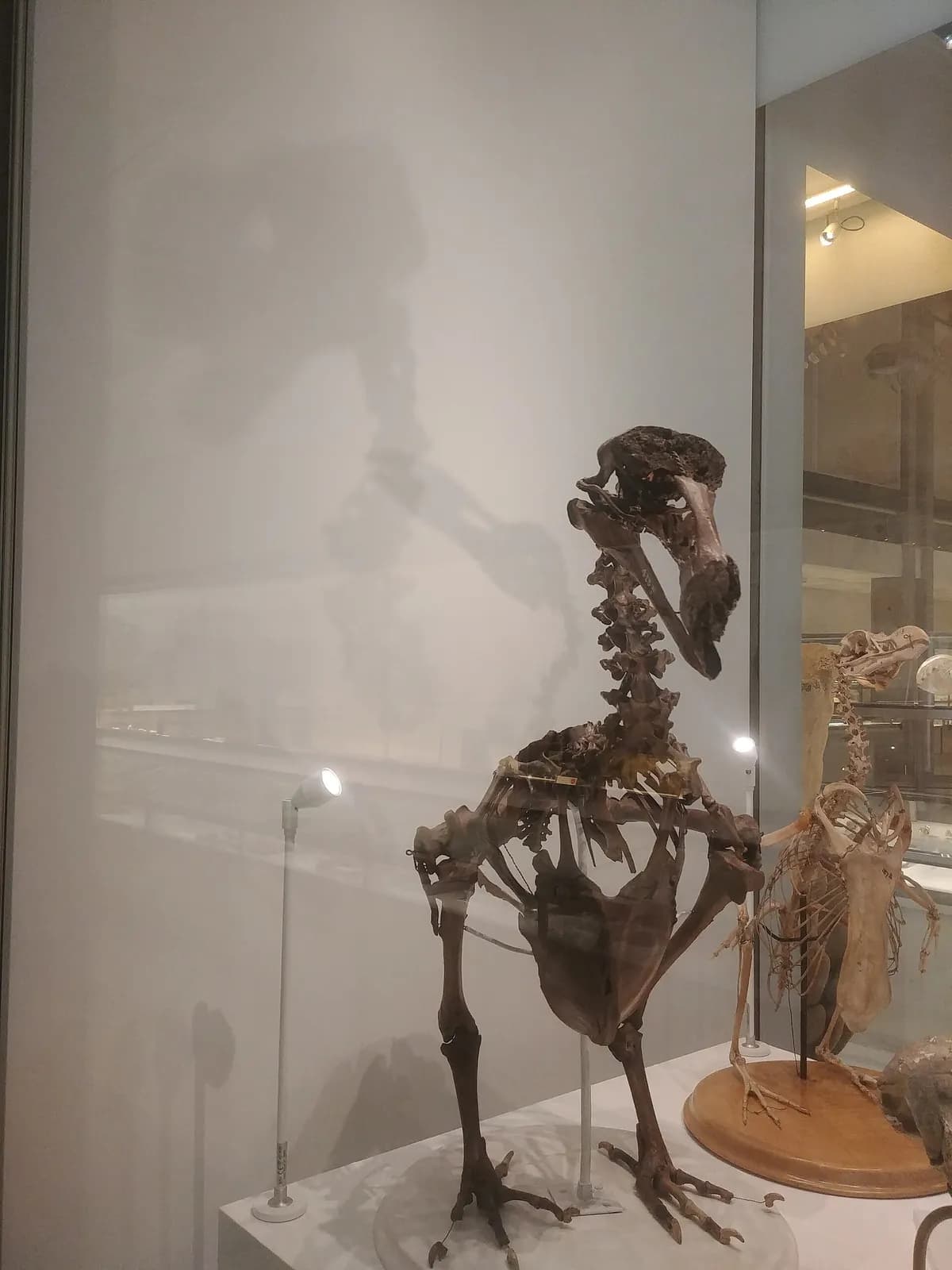
At the Cambridge Museum of Zoology, thirteen specimens, from the dodo to the cockroach, held more than 4,700 conversations in one year with more than 3,000 visitors from more than 150 countries.
The question one keeps to oneself in front of a museum educator finds someone to answer it here. At the Musée national des beaux-arts du Québec, visitors who tested the conversational agent put it this way, the museum reports, “you can ask a robot any question, nothing is pointless or embarrassing, whereas a guide can be intimidating”.
Conversation also comes at a cost to the visit. A conversation of eight messages means eight times the eyes leave the work for the screen, and the route pauses for the length of the exchange. For this reason, some venues prefer a story told in the ear that keeps the eyes on the work.
What these operations open up to small venues
These operations matter even more for small institutions. Languages and voice arrive without a recording or a translation to produce for each one, as at SMK. An entire collection receives descriptions no team would have had the time to write, as in Cleveland. And the material already exists in most venues, in object records, labels, gallery files and guided tour scripts. In the UNESCO and ICOM survey, small museums with an annual budget under 100,000 dollars cite their staffing and resource constraints, and recognise what AI can ease.
An answer is only as good as the material behind it
The technical distinction that matters most to a museum separates a model that answers from memory from a model that answers from the venue's own documents.
The model that answers from memory
In 2023, Duke University's Nasher Museum of Art asked a general-purpose conversational model to design an exhibition drawn from its collections. Without access to the museum's database, the model proposed generic types of works, such as “a pre-Columbian Maya vase depicting a royal ceremony”, when the Nasher's database holds hundreds of them, or masterpieces held elsewhere, such as Picasso's Three Musicians, whose two versions are in New York and Philadelphia. In other cases, it invented works that do not exist.
A general-purpose model answers with what it learned elsewhere, and when it does not know, it fills the gap. The Nasher team corrected this by connecting the model to the public records of more than 14,000 objects.
The model that answers from the museum's own material
The London Museum took the other route in July 2025. Its conversational agent answers solely from the museum's data, and the museum publishes its limits plainly. Dates, titles or materials may be simplified or rounded when the machine rephrases a record. Dated or offensive terms inherited from old records may resurface, and answers to questions of opinion do not commit the museum.
The lesson concerns curatorship more than computing. The material decides the answer, and the care a museum puts into its labels now carries over to what it entrusts to the machine.
Approval sits before and after the answer
Reviewing before publishing is a rule of the profession that AI does not call into question. What it changes is the moment when that review can take place.
Among responding museums that use AI, 81% always have a human review what it produces before using or publishing it, according to the UNESCO and ICOM survey. An answer composed at the moment the visitor asks the question, however, goes out before any member of the team has been able to read it. Approval shifts towards what precedes the answer, the material, the terminology, the permitted topics, and towards what follows it, reading the exchanges and making corrections.
The material, the first approval
The first approval concerns the material. The machine starts from the records, labels and sources the team has chosen, and what comes out of it is reviewed and corrected like any other text of the venue.
This is what Peekigo does, an intelligent visit companion, the visitor scans a work with their phone and a story begins, adapted to their profile and language; the stories start from the venue's records and sources, and the team reviews and corrects every text in its portal.
SMK in Copenhagen has made this division of roles the public rule of its future guide, where the machine adapts what the team has written, held in check by the museum's glossary and pronunciation guide.
Four documented approaches
The venues that have published their method outline four ways of working, from the most closed to the most open.
| What the machine does | What the team approves | When | Where |
|---|---|---|---|
| It selects a recorded answer | The questions put to the witnesses, and every filmed answer | Before, once and for all | Museum of Jewish Heritage, New York, 2025 |
| It translates and voices texts written by the team | The source texts, the glossary, the pronunciation | Before, then as corrections come in | SMK, Copenhagen, guide expected in 2027 |
| It composes an answer from selected sources | The sources, chosen with the curator | Before | Palace of Versailles, 2025 |
| It generates at scale, under automated checks | Texts below the quality threshold, and visitor feedback | Before going live below the threshold, afterwards when flagged | Cleveland Museum of Art |
Recorded answers. In New York, the Museum of Jewish Heritage opened in 2025 a dialogue with ten Holocaust survivors, aged 90 to 98, filmed answering a long list of questions. The machine recognises the visitor's question and plays the recorded answer, unedited; it does not interpret and composes no new answer, the museum specifies.

Selected sources and permitted topics. At Versailles, the statues kept to their subject. A Business Insider journalist who asked a statue about Paris was told that it reigned over the fountains of Versailles and not over the city, and found the conversation somewhat curt. The range of topics is a setting, which each venue fixes according to the dialogue it wants to open.
Review at the threshold. In Cleveland, a generated description that does not reach the threshold of the automated check goes to human review. All of them carry a notice indicating their origin, and a text written by hand can always replace a generated one, never the reverse.
After the answer, approval runs through reading the exchanges and the reports from visitors. The team spots there what needs to be reworked in the material, a poorly worded date, a term to clarify.
Accuracy, rights and data are framed from the contract stage
Museums that use AI place three subjects at the top of their difficulties, accuracy, then copyright (63%) and data protection (61%). Each is settled through choices the venue already knows how to make.
The accuracy of what is said
In the UNESCO and ICOM survey, museums describe themselves as trusted sources of cultural and historical information, a credibility that inaccurate or poorly sourced content could erode. The material, the permitted topics and the reading of exchanges are its concrete expression.
The law adds a simple rule. Since August 2, 2026, a person interacting with an artificial intelligence system must be made aware of it, unless it is obvious (Article 50 of the EU AI Act).
Rights over the venue's texts
The texts that curators and museum educators write in the course of their duties serve the venue's mission, and adapting them into a visitor guide falls within it. Using them to train a provider's models is a different use, which is settled by a clause in the contract.
Visitors' questions
A question asked in writing or aloud is data. The London Museum keeps anonymised conversations for 90 days to improve its agent, and says so on its page. The CNIL, the French data protection authority, asks any organisation deploying generative AI to check to what extent the provider reuses the data supplied.
These questions are also material for interpretation, and Versailles announced that they would be used to compose personalised routes.
What a provider should be able to show before signing
The general criteria for an audio guide, such as content ownership or the economic model, are covered in our guide on choosing a museum audio guide well. AI adds five, which can be checked against evidence.
The list of sources, and the behaviour beyond them. A provider can show the sources its machine is allowed to use, who on the team chooses and reviews them, and what it does when the answer is not there, which the London Museum states on its page.
An off-topic demonstration. A question unrelated to the route, asked in front of the team, immediately shows where the limit lies and in what tone the guide restates it, in the manner of the Versailles statues.
The answer log and the correction time. The team can read what has been answered, knows how long it takes for a correction to apply to every subsequent answer, and knows whether visitors' questions are used to train other models.
Informing the visitor. The law requires visitors to know they are talking to an AI; what remains to be seen is how the guide tells them, and how a generated text is distinguished from a written one, as in Cleveland.
The use of the venue's texts. A clause states whether the records, labels and texts written by the team may be used to train the provider's models, and under what conditions.
The venue's signature on every answer
At Versailles as in Copenhagen, the machine speaks from what the museum has entrusted to it, to visitors no single text would have reached, in their language and at their measure. The machine multiplies the ways of hearing a work; the signature remains the venue's, placed on the material before the answer and reviewed after it.
For a small venue, this is the most concrete news. The Jázs Múzeum in Hungary asked, in the UNESCO and ICOM survey, for guidelines specific to museums and “practical examples for small regional museums”. These examples are beginning to exist, and the first task they require, gathering reliable material, most venues have already accomplished by writing their records and labels.
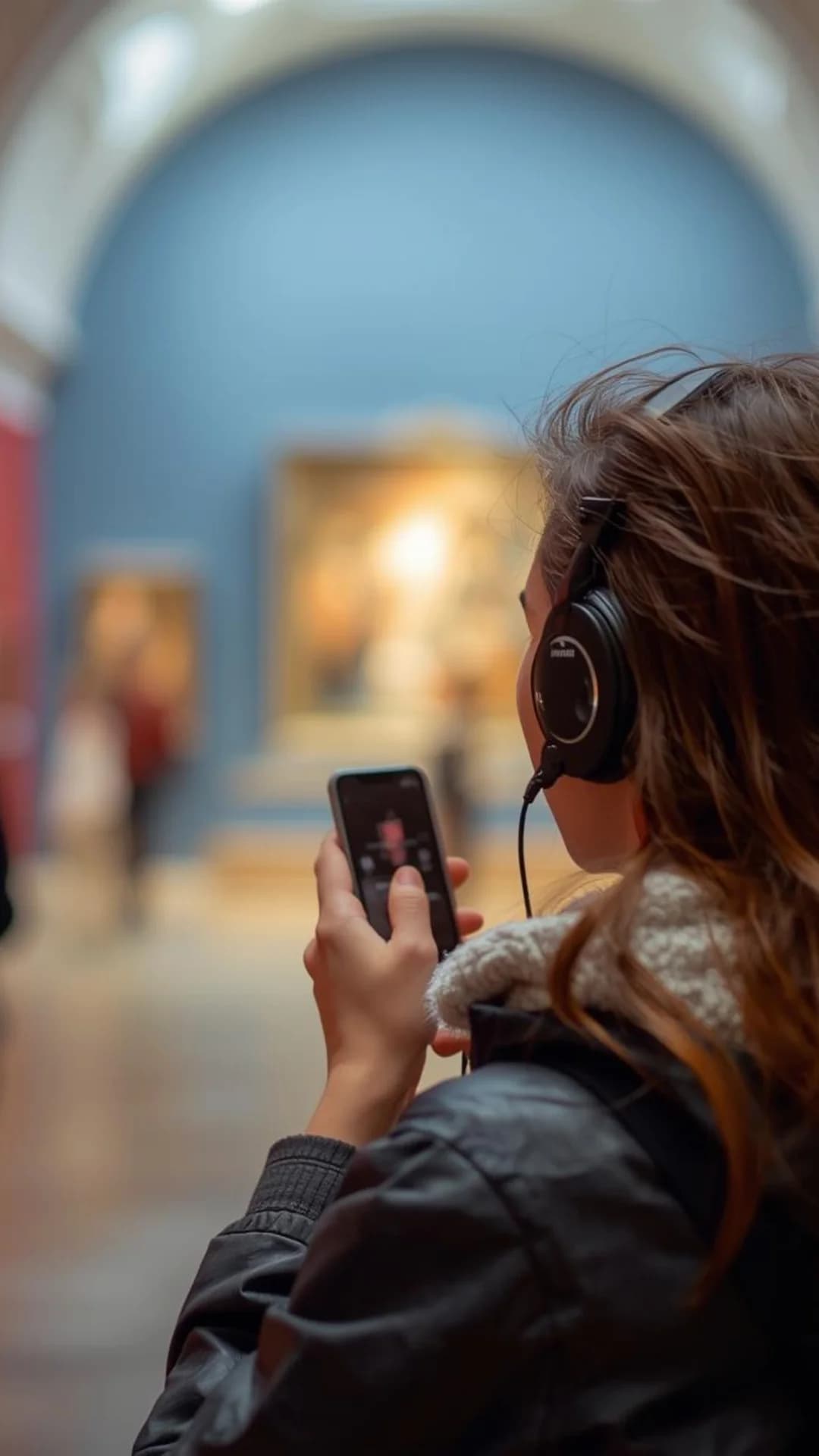
Peekigo, the intelligent audio guide that adapts to each visitor
Your works told to every visitor, in their language, on their smartphone, with no hardware to manage.
Frequently asked questions
What is an intelligent audio guide?→
An audio guide that adjusts the story to each visitor, their level, their language, sometimes the time they have, based on the venue's content, and that sometimes answers questions asked in front of the work. Its quality depends on the material entrusted to it and on the way the team approves what it says.
Can artificial intelligence make mistakes in an audio guide?→
Yes, especially when it answers from memory. Without access to its museum's database, the model tested by the Nasher Museum proposed works held elsewhere and invented others. Venues limit errors through a closed body of material, like the London Museum, through permitted topics, like the Versailles statues, and by reading the exchanges.
Does the EU AI Act apply to a museum audio guide?→
Yes, for transparency. Since August 2, 2026, visitors must know they are talking to an artificial intelligence, unless it is obvious. A visitor guide is not among the uses the regulation classifies as high risk. Providers and venues that use AI also take measures to promote AI literacy among their teams.
Can curators' texts be used to train an AI?→
Written in the course of their duties, these texts serve the venue's mission, which covers their use in a visitor guide; for public employees, the French Intellectual Property Code limits the transfer of rights to what the public service mission requires. Using them to train a provider's models is a different use, which the contract authorises or excludes through a clause. Texts by external authors, such as catalogue essays, follow their own contracts.
What happens to the questions visitors ask?→
They are data. The London Museum keeps anonymised conversations for 90 days to improve its agent, and the CNIL, the French data protection authority, asks organisations to check whether the provider reuses the data supplied. They also reveal what visitors want to know, and Versailles announced that they would be used to compose personalised routes.